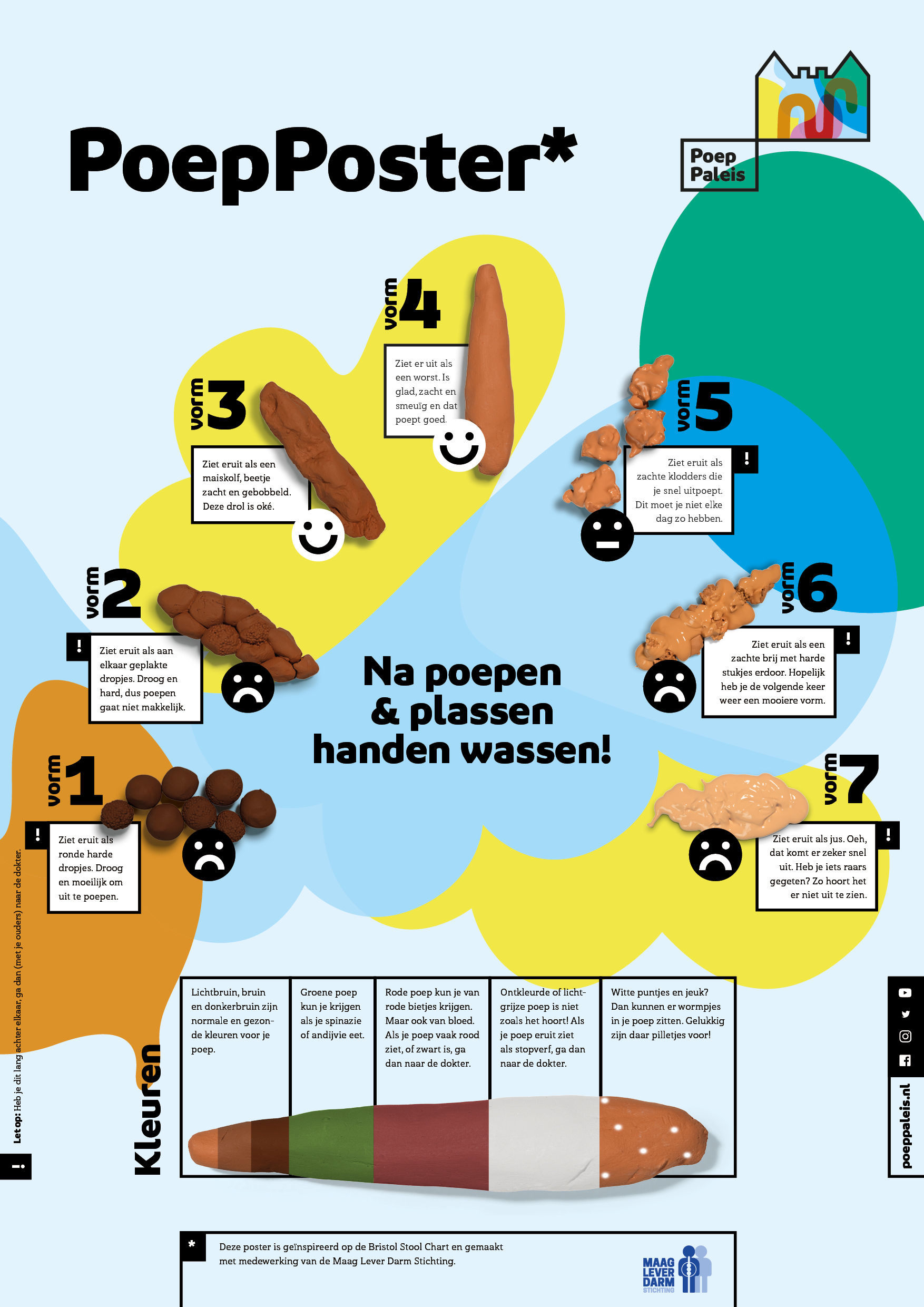
The veterinarian
ExperimentsWhat poop tells you
Poop, you probably think it's a strange subject! People are often embarrassed to talk about it, but it is actually very important, because your poop can show how healthy you are.
What poop tells you
Poop, you probably think it's a strange subject! People are often embarrassed to talk about it, but it is actually very important, because your poop can show how healthy you are.
It consists of food scraps that your body cannot further digest or use, and it is made up of water, mucus, cells, and lots of bacteria. Pooping is very natural. Some people do it every day, others every other day. The smell, the color, and how often you poop all depend on what you eat, how you eat, how much you eat, and whether or not you eat healthily.

Animals also eat and poop. There are animals that poop a lot every day, but there are also those that have very soft poop or only poop once a week. In some animals, the poop comes out in round pellets, but there is also an animal that produces square poop — the wombat!
Perhaps you have a pet of your own. How do you know if your animal is healthy or not? What does your animal need to stay healthy? Find out with the activity about poop and health in humans and animals. Become a vet yourself and investigate why your favorite cuddly toy is sick and how you can make it better.


A stuffed animal (cuddly toy)
A toy doctor's kit with medical play set
A play area in the house to set up an animal hospital and a pharmacy
Cardboard boxes to make beds and crates for the sick animals
Red paper and black paper
White pencil
Scissors
Small boxes or jars to hold pills
Pills (use colored buttons, beads, or iron-on beads for this)
Bandages
Feeding bowls
Toy food
Clay (brown and colored)
Printer and/or laptop
Find a nice spot in the house where you can set up your animal clinic. Gather all your supplies and organize the clinic with, for example, a pharmacy, a hospital, a doctor's station, etc. You can make it as elaborate or as simple as you like. Below you will find some ideas.
The Cuddly Toy Pharmacy
The pharmacy is a little shop filled with things you would find in a real pharmacy. Think of medicine jars, medicine boxes, pills (buttons, iron-on beads, or regular beads), a cash register, bandages, patches, ointment tins, etc. Sort the pills by color. Each color represents its own medicine. For example: red for stomach aches, yellow for headaches, and green for sniffles.
The Cuddly Toy Doctor’s Office
The doctor’s office contains all the items you would find at a real doctor. Think of first aid kits, a doctor's bag with equipment, bandages, an eye test chart, scales, a measuring tape, etc.
The Cuddly Toy Hospital
This is where the beds are. You can make them from empty cardboard boxes, mandarin orange crates, or doll beds. You can cut crosses out of red paper and stick them onto the beds. Do you need an X-ray? Trace your stuffed animal on black paper using a white pencil. Then, look up your animal's bones on the internet and draw them inside the outline of your stuffed animal. This will give you a great X-ray photo!
What on earth is wrong with your animal? Naturally, the doctor wants to know what it has been eating lately and what your stuffed animal's poop looks like. These things say a lot about its health. Has your animal been eating healthily lately? Or did it only eat cake and fries? Did its poop look nice and brown, or did it have all the colors of the rainbow?
Grab the brown and colored clay and fill out the Poop-Clay form. In the box with the plate, choose what your animal has eaten and draw it on the plate. In the box with the animals, you can find a picture of your animal and paste it there. In the large white space, use clay to recreate your animal's poop. If necessary, look up on the internet exactly what that poop looks like. Hand the poop in to the vet; they can surely tell you more about it.
Have fun and remember: the best medicine for a stuffed animal is still 'lots and lots of cuddles'!
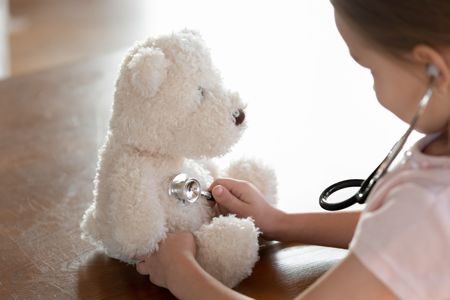
On the websites below, you can learn what to look for regarding your own poop. To do this, you have to take a look behind you in the toilet to check your poop.
Poop Guide - Stomach, Liver, Intestinal Foundation
Poop Poster