Allosaurus

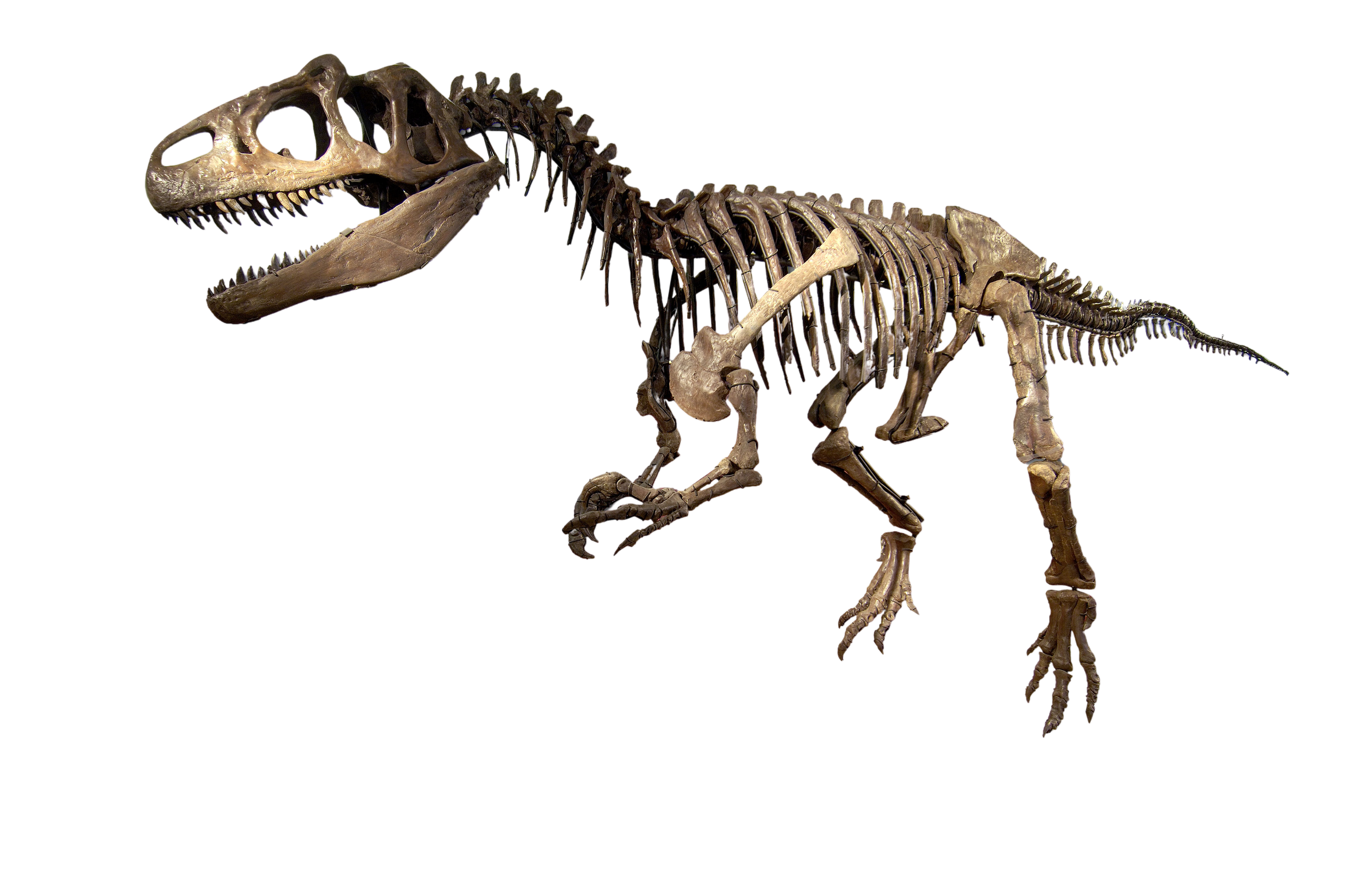
The Allosaurus at Museon-Omniversum measures 8 metres in length. Its head reaches a height of 3.30 metres, while the hips stand at 2.70 metres tall.

The Allosaurus was discovered on a private ranch on the border of Utah and Wyoming in the United States, about thirty kilometres east of the town of Jensen.

The Allosaurus is now on display in the new exhibition Tijdreistheater (Time Travel Theatre).

Almost complete

Our Allosaurus was discovered in a remarkably complete state. For the missing elements, casts were made from another Allosaurus. These include one half of the lower jaw, several parts of the legs, a number of ribs and the delicate projections of certain vertebrae. Features that are rarely preserved. All other parts of the skeleton, including every tooth are entirely original.

From find to skeleton 

Preparing the fossil was an enormous task. The pelvis, for example, had to be extracted from very hard sandstone. The challenge was that the fossilized bone is almost as hard as the surrounding rock, making it difficult to distinguish where bone ends and stone begins. This makes the preparation process extremely time consuming. The neck vertebrae were embedded in claystone, which brought its own difficulties. Many of the vertebrae were deformed, but the preparator skillfully reconstructed them, creating a slightly S-shaped neck. This shape matches what has been seen in previous reconstructions. The Allosaurus is displayed in an active pose, as if it is walking away.

Brown

The skeleton appears mostly brown due to the presence of iron oxide (rust). There are also whitish patches visible on the fossil. These marks were likely caused by an unknown mineral that, as it broke down, partially dissolved the iron oxide, creating the lighter spots.                                                

Where did we find the Allosaurus?

The Allosaurus at Museon-Omniversum was discovered in the world-famous Morrison Formation. This sedimentary layer formed between 155 and 148 million years ago in the central United States and covers an area of 1.5 million km². At that time, the climate was much warmer than today. A subtropical climate extended as far north as 60° latitude  roughly the southern tips of Greenland and Finland and there are indications that dry seasons also occurred. In the southern part of the Morrison Formation, sandstone layers were formed as dunes in a desert environment. Further north, the formation consists of sediments deposited by meandering rivers, which left traces in the form of sandy channels. It was within these river deposits that the Allosaurus was found.

More information about the Allosaurus

Lifestyle of the Allosaurus chevron down


The Allosaurus was likely an active predator, but it probably also fed on carrion. Given the number of fossils found together in different quarries, it is possible that Allosauruses lived in small groups and could have hunted prey as a pack. Herbivorous contemporaries such as Diplodocus, Apatosaurus (formerly known as Brontosaurus), Stegosaurus, and Camarasaurus (on display at Naturalis) may have been among their targets. Fossil evidence shows bite marks from Allosaurus on the tail vertebrae of some Apatosauruses, which researchers suggest could indicate scavenging behavior.

Biggest Carnivore 

In the late Jurassic period, the Allosaurus was the largest carnivore roaming North America, Africa, Australia, and China. Measuring 8 to 12 meters in length, an adult Allosaurus likely weighed several thousand kilograms. It walked on powerful hind legs, each equipped with strong claws, while its tail played an important role in maintaining balance. Each forelimb had three fingers with sharp claws, almost certainly used to hold onto prey. Interestingly, the forelimbs of an Allosaurus were longer than those of Tyrannosaurus rex. Its skull was relatively lightly built, with large openings between the bones. These openings reduced weight while also providing strength and stability when biting into prey. The jaws were lined with about seventy sharp, dagger shaped teeth.


Allosaurus Discoveries chevron down


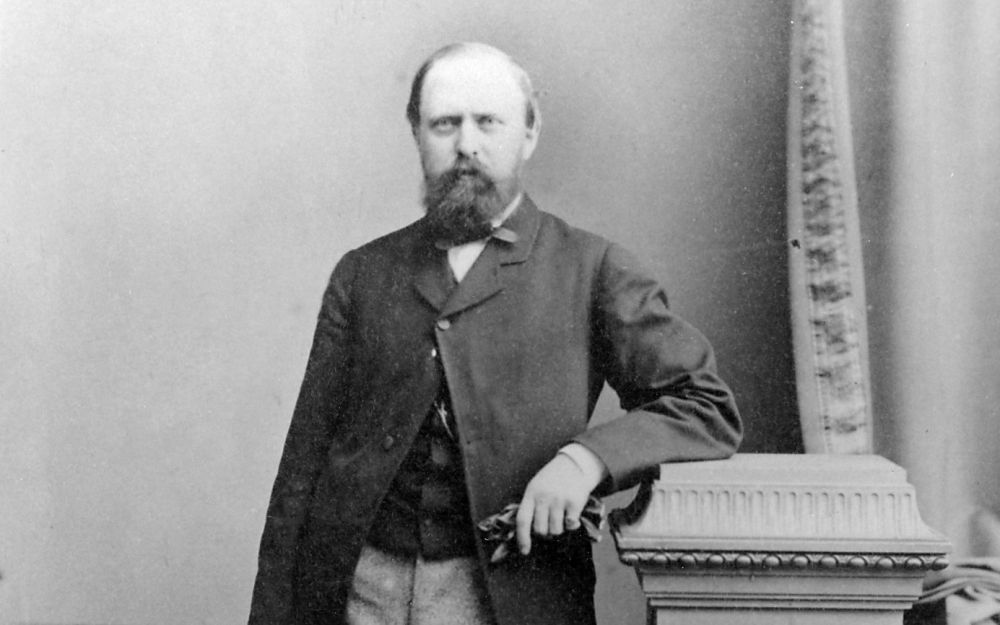
(Foto: Othniel Marsh)

The Allosaurus was first described in the late 19th century as Allosaurus fragilis by the famous paleontologist Othniel Marsh (1877). The initial description was based on a tooth, a few vertebrae, and a toe bone. Over time, as more fossils were discovered, the description could be refined. Today, many Allosaurus specimens have been found, making this dinosaur well understood. For example, at the Cleveland-Lloyd Dinosaur Quarry in Utah, at least 44 individuals have been uncovered, including both adults and juveniles. This is unusual, as carnivores are rarely found in such large groups.

However, research has shown that so-called “dinosaur graveyards” often contain surprisingly many carnivores. Such a concentration is easier to understand for herbivores, since many species are known to have lived in herds. Scientists believe that the Allosaurus finds at Cleveland-Lloyd may represent a predator trap. This means that hunters chasing prey could meet their end in the same way, falling into underground cavities or becoming trapped in a swamp for example. It is also possible that many of the carnivores there died as scavengers.

Onderzoek naar de Allosaurus van Museon-Omniversum chevron down

In 2014, three students from the Vrije Universiteit Amsterdam conducted research on the Allosaurus at Museon-Omniversum. Their goal was to learn more about the life of this dinosaur.

Growth Layers in the Bones

One of the students, Sifra, explained: “I drilled a small hole in its femur to examine the microscopic growth layers in the bone. Bones grow at different rates in winter and summer, which creates something like annual rings, similar to those in trees.” By counting these layers, she was able to determine the Allosaurus’ age. “We believe this Allosaurus was about fifteen years old, which means it was fully grown.”

CT-scan

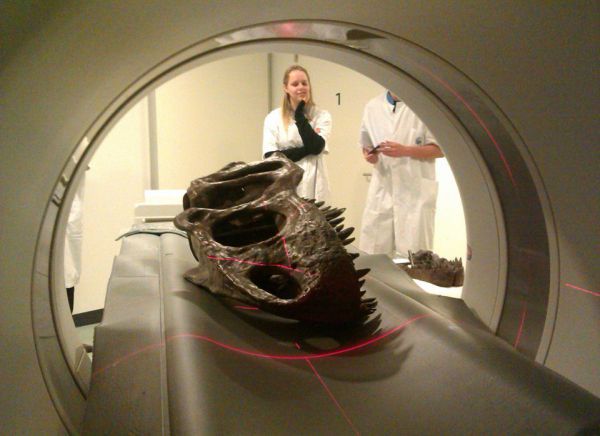
The Allosaurus also paid a visit to the HagaZiekenhuis in The Hague, where it underwent a CT scan. Jelle explained, “By running the skull through the CT scanner, you can clearly see all the bones and cavities.” The hospital was happy to help, and the doctors were especially interested in working with such an unusual patient. “Unfortunately, the brain cavity is filled with clay, so we can’t determine how intelligent the dinosaur was,” Jelle noted. “But we do know that the skull is fairly complete.”

You are what you eat

Jasper studies the Allosaurus’ teeth: “You are what you eat, and that goes for Allosauruses too. As the teeth grow, the type of food leaves a pattern in them.” He examines this pattern to find out what the dinosaur ate. “I see two signals in the pattern. One is typical of food from mountainous areas, the other from lowland regions. Our Allosaurus probably migrated between these areas to feed throughout the year.”